
The real reasons for risky behaviour in companies – what SMEs need to know to avoid failures
Why do employees make risky decisions – even when they know the possible consequences?
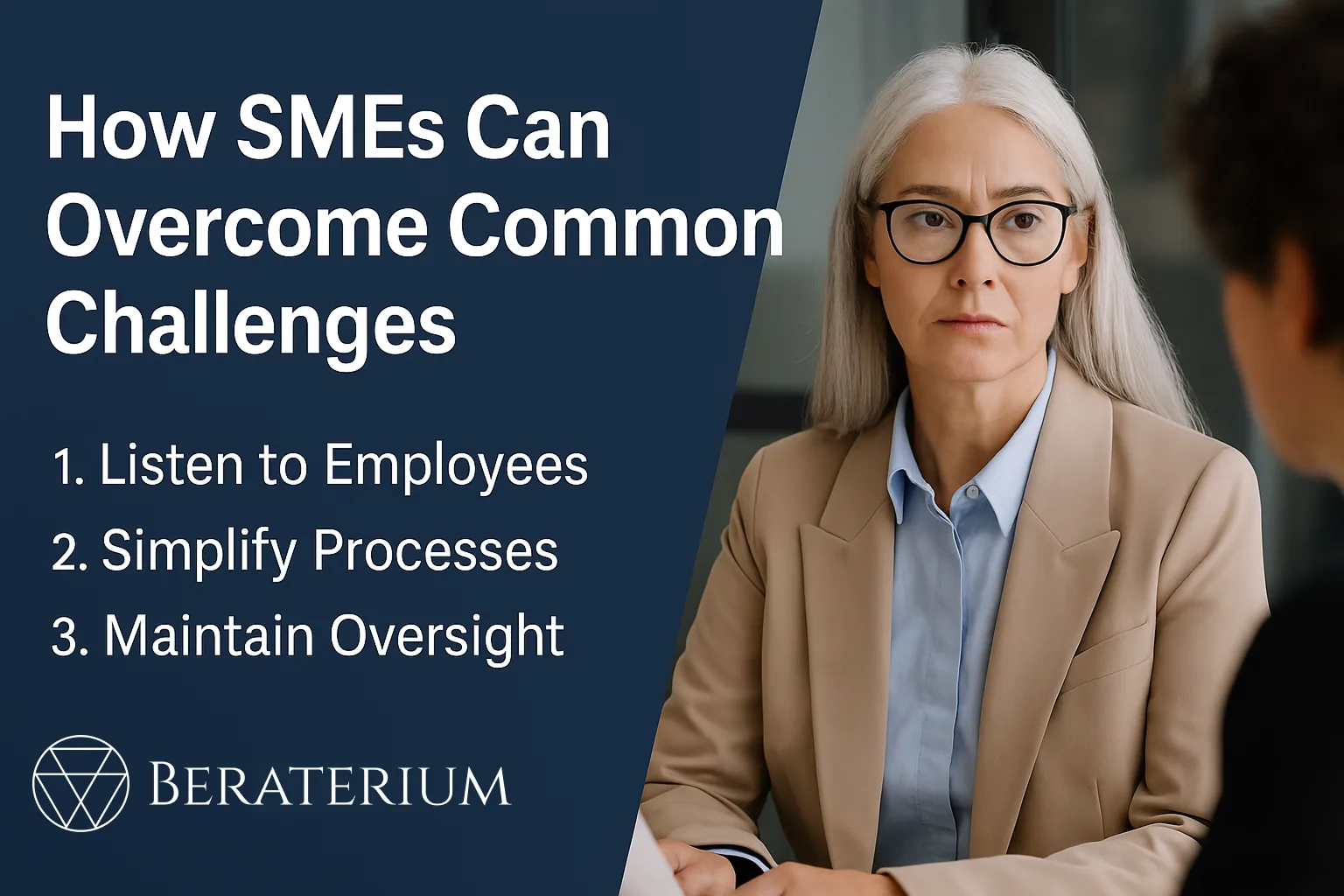
In many small and mid-sized companies the biggest risks arise not through technology or missing processes but through people: through routine, overload, unspoken expectations and social dynamics in the team.
When experienced employees skip rules out of habit, when time pressure forces quick solutions or teams conceal risks because nobody wants to "cause trouble", risks grow quietly in the background. Management pressure – for example through too few resources, shortened onboarding or permanent urgency – reinforces this behaviour further. A risk management method that involves people addresses these blind spots.
The true origin of many failures rarely lies in a single mistake but in missing communication: not saying what you see; not asking what you do not understand; not reporting what feels wrong.
SMEs reduce risk sustainably when they change the conditions that encourage risky behaviour: open communication, realistic expectations, clear priorities and recognition for care instead of speed.
People are not the problem – the systems that push them towards risky decisions are.
Companies often talk about technical risks, organisational weaknesses or missing standards. Yet in daily practice a much more fundamental pattern emerges: most risks arise through people – through their expectations, their self-image, their stress and the culture in which they work.
Especially in the mid-market, where much rests on experience, pace and trust, these psychological and social factors are particularly strong. They decide whether warning signs are taken seriously, mistakes are raised or risks are consciously ignored.
But why do people take risky decisions at all when they ought to be aware of the possible consequences?
Experience, routine and the quiet poison of overconfidence
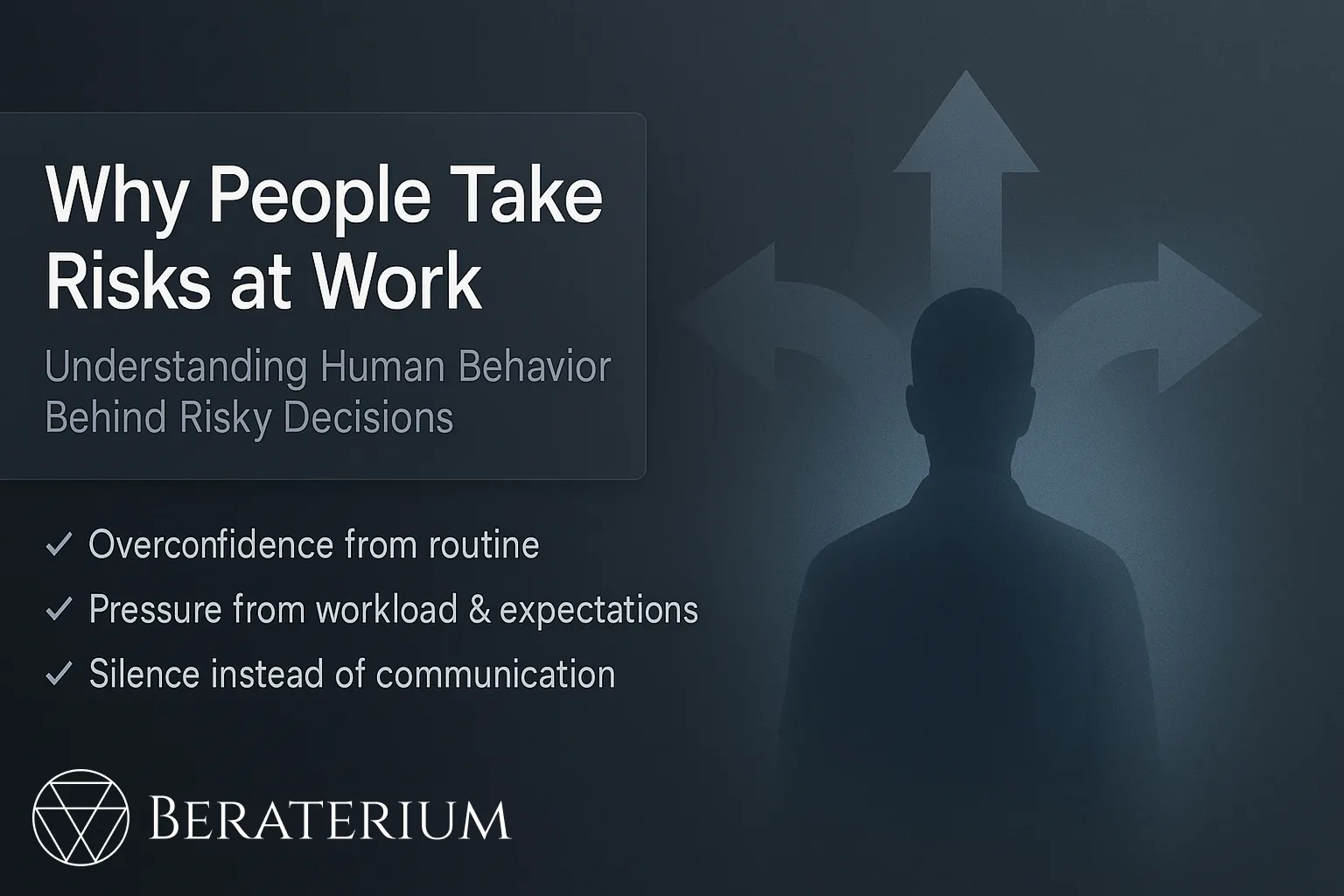
Many mid-market companies rely on people who "have been in the business for 20 years" and know workflows by heart. Experience brings security – but precisely that security can create risk. When you have made the same movement thousands of times, you lose respect for what could happen. A button is pressed faster, maintenance is postponed, a guard is seen as "unnecessarily cumbersome".
From routine comes carelessness.
From carelessness comes conviction: "I know what I'm doing."
Overconfidence is rarely loud. It shows in small moments:
hesitating to look something up; quickly skipping a safety check; the feeling that rules are mainly for newcomers.
This mix of routine and conviction is one of the strongest drivers of risky behaviour – not from recklessness but from familiarity. That is where the most dangerous part begins: when experience becomes an excuse not to take new things seriously.
Recognition, group pressure and invisible team dynamics
Risky behaviour is never only individual. It arises in systems – in teams that want to be fast, appear reliable or prove to each other that they "can handle it".
Many employees take risks because they want to show they can cope.
Because they do not want to be seen as slow, fussy or uncertain.
Because they do not want to disappoint anyone or hold people up.
And because in many teams expectations circulate that are never spoken openly:
"We'll get through this."
"We'll manage."
"We don't want to make a fuss."
In such cultures warning signs grow quieter – not because they are missing but because nobody wants to hear them.
A "odd noise" on the machine is ignored.
A gut feeling is set aside.
A mistake is carried around instead of raised.
A dynamic emerges in which people take risks not despite the team
but because of the team.
Management pressure: when efficiency becomes a danger
An area that is especially underestimated in many SMEs is the role of management.
Not in the sense of wrong decisions – but in how goals, expectations and resources work in everyday life.
When companies work for extended periods with too few staff, unclear priorities or permanent cost pressure, employees automatically end up in situations where risk becomes a "necessary evil".
That shows in several patterns:
- Maintenance intervals are pushed back because "it doesn't suit right now".
- Onboarding is shortened because "we need someone who can step in immediately".
- Processes are improvised because "we have no time for planning".
- Safety mechanisms are bypassed because "production would otherwise stop".
- Open concerns disappear because "we have to deliver results now".
Management pressure rarely works through direct instructions.
It arises through framework conditions – too few resources, too high expectations, constant urgency.
And it is precisely under these conditions that people make decisions they would never make in more stable circumstances.
The irony:
what is intended as efficiency produces the greatest inefficiencies in the long run.
Communication: the biggest risk factor – and the greatest opportunity
If you trace risks back to their origin, you almost always end up in the same place: missing communication.
Not in the sense of "too few meetings" but in the sense of:
- not saying what you see
- not asking what you do not understand
- not reporting what you fear
- not objecting when something is going wrong
Communication is often treated as a "soft skill", yet it is the hardest safety factor a company possesses.
A team that speaks openly has fewer accidents.
A team that takes warnings seriously has fewer stoppages.
A team that shares mistakes less often makes the same mistake twice.
The problem: many employees have learned that silence is safer than openness.
Not from laziness – but from fear of being wrong.
That is why a company with excellent machines, good processes and clear rules can still have high risks – if the people in it do not talk to each other.
Communication is not an "add-on".
It is the operating system on which everything else runs.
Concrete recommendations for SMEs
1. Question routines regularly
What is done because it makes sense – and what only because it has always been done that way?
2. Redefine recognition
Not the fastest person is rewarded but the careful one.
Not the hero but the one who reports risks early.
3. Set realistic management goals
Less "faster, higher, immediately" – more priorities, resources and proper onboarding.
4. Create spaces for communication
Short, regular check-ins explicitly intended for concerns – not status reports.
5. Understand mistakes as a source of information
Not "who was to blame?" but "what do these patterns tell us?".
6. Train leaders to take warnings seriously
When the boss does not listen, everyone else falls silent.
Conclusion: people act riskily when systems push them to
In the end it is not about making employees "more cautious".
It is about creating conditions in which caution is possible.
Where routine does not blind, where pressure does not paralyse, where recognition does not trump risk
and where communication is rewarded, not punished.
Risks arise in minds, hearts and cultures – not in Excel spreadsheets.
Those who understand people understand risk.
And those who understand risk can lead their company safely and sustainably.