

What is key person risk – briefly explained?
Key person risk describes the economic damage when someone indispensable to the business is absent long term – through illness, resignation or death. In many SMEs that is management itself. It is one of the few risks that affects every business – from solo self-employed people to mid-market firms with 200 staff – and simultaneously one of the most often pushed aside: people rarely plan their own outage.
Whether someone is a "key person" is not decided by title but by three test questions:
- Does a central process stop if this person were out tomorrow?
- Does their knowledge exist only in their head – not in documents or systems?
- Do important customer or supplier relationships depend personally on them?
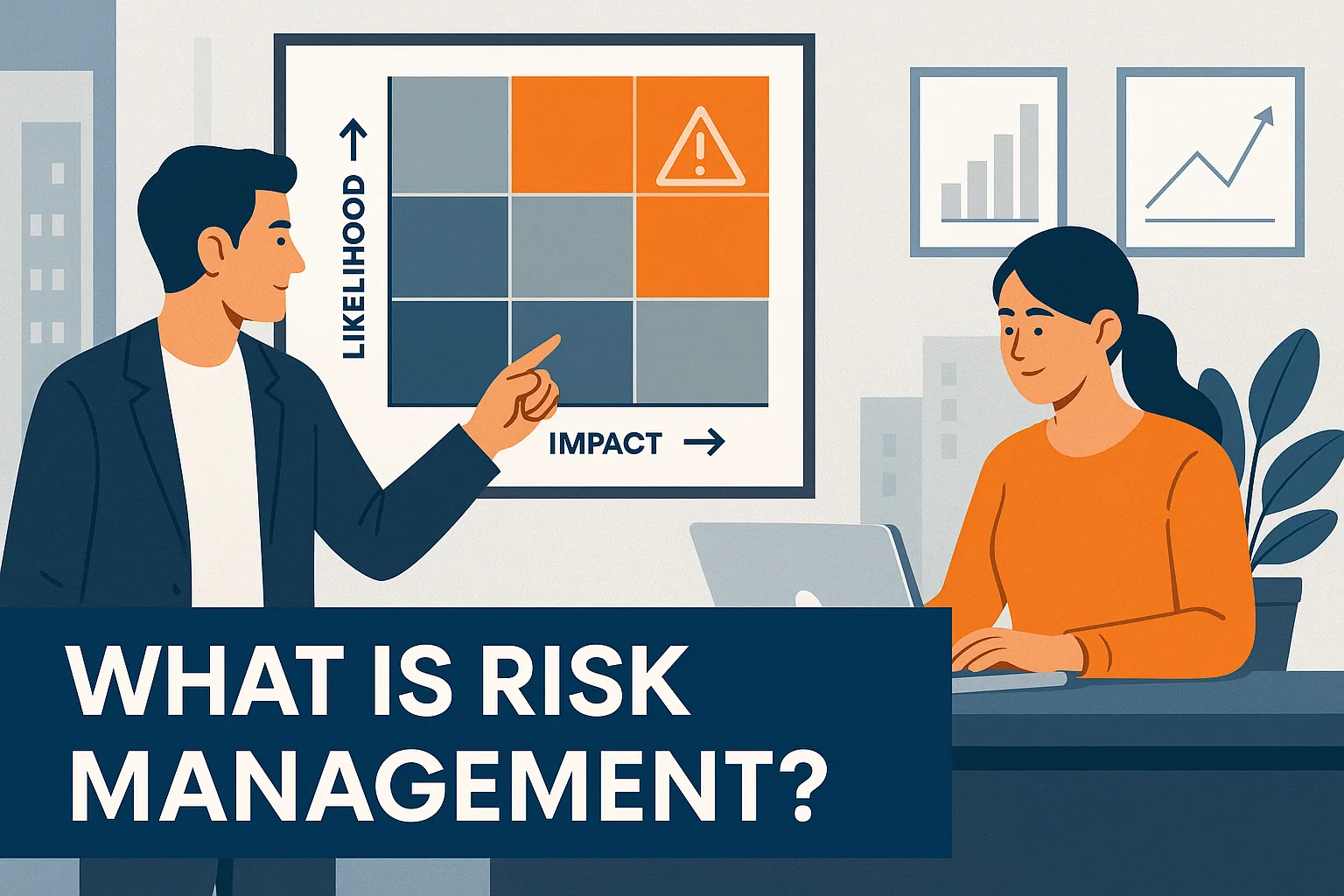
Two of three yes answers are enough. How to assess and prioritise such risks in general is explained in What is risk management?
How does the risk show up for SMEs, startups and solo self-employed people?
The same risk, three very different faces:
Solo self-employed people: the person is the business. Every day out costs revenue immediately, and nobody takes over. Illness and incapacity are not a HR question here but the existential question – covered in depth in The biggest risks for the self-employed and on the offer page 2-week risk compass.
SMEs: managing directors and master craftspersons as single points of failure. In the mid-market, one or two people often hold exclusive expertise, bank contacts and the most important customer relationships – not infrequently for decades, with nothing documented. If the operations manager or managing owner drops out, production, quoting and customer trust stall at once. The 6-week clarity roadmap for SMEs makes exactly these dependencies visible.
Startups: founder knowledge and founder burnout. Product architecture, investor relationships and product vision concentrate on two or three heads – under workload that itself raises outage risk. For investors, unresolved key person risk is also a due diligence topic: anyone who runs the 4-week risk check for startups has a solid answer ready.
How does the three-tier hazard catalogue capture key people systematically?
In Beraterium's three-tier hazard catalogue, loss of key people is its own hazard class – alongside external hazards (market, cyber, regulation) and internal process risks. The analysis runs in three steps:
- Identify: For each critical function, check who carries it and whether cover exists – using the three test questions above, function by function.
- Assess: Each outage scenario is assessed in euros – lost revenue, external cover costs, endangered customer relationships, project delays. Only the number makes the risk comparable.
- Prioritise: The result feeds into the risk matrix and is weighed against all other risks – such as a cyber attack or a cash shortfall. Budget lands on the risk that really costs most. Deeper coverage is on Key person risk.
Which immediate measures reduce the risk – even without a large rollout?
Four measures work immediately, cost almost nothing and apply to all three business types:
- Document knowledge: Capture the ten most important processes, access details and contacts in writing – an afternoon's work that saves weeks in an emergency.
- Set cover rules: Who decides what if the key person is away for two months? In writing, with powers of attorney for bank and signatures.
- Spread relationships across two people: The most important customers and suppliers should know at least two people in the business personally.
- Create an emergency folder: Passwords, powers of attorney, insurance and the cover plan in one place a trusted person knows about.
Key person insurance can cushion financial damage – but it replaces neither knowledge sharing nor cover arrangements. Insurance covers money, not ability to act.
If you want to know which people in your business are critical and what their outage would cost concretely: in a free intro call we work through the three test questions together – 30 minutes, no obligation.