

What is false self-employment – briefly explained?
False self-employment applies when someone formally works as a freelancer but is actually integrated like an employee – visible through criteria such as a single client only, fixed working hours and work under direction. In that case the German pension insurance can claim social security contributions retrospectively over years. For solo self-employed people, this status risk is therefore one of the three biggest risks overall – alongside outage and customer concentration, as summarised in The biggest risks for the self-employed.
The tricky part: false self-employment builds up gradually. A project goes well, is extended, eventually fills the whole week – and what was genuine self-employment has become a disguised employment relationship without anyone intending it.
How do I spot false self-employment in practice?
The German pension insurance reviews the overall picture of the working relationship, not a single criterion. These five indicators weigh most heavily:
- Single client only: The overwhelming share of revenue comes from one customer.
- Direction from the client: The client determines how, when and where work is done – not only what is delivered.
- Fixed hours and presence duty: Integrated into shift plans, core hours or team meetings like employees.
- Integration into the organisation: Company email address, fixed desk at the client, use of internal systems like staff.
- No entrepreneurial presence: No own market profile, no own pricing, no entrepreneurial risk.
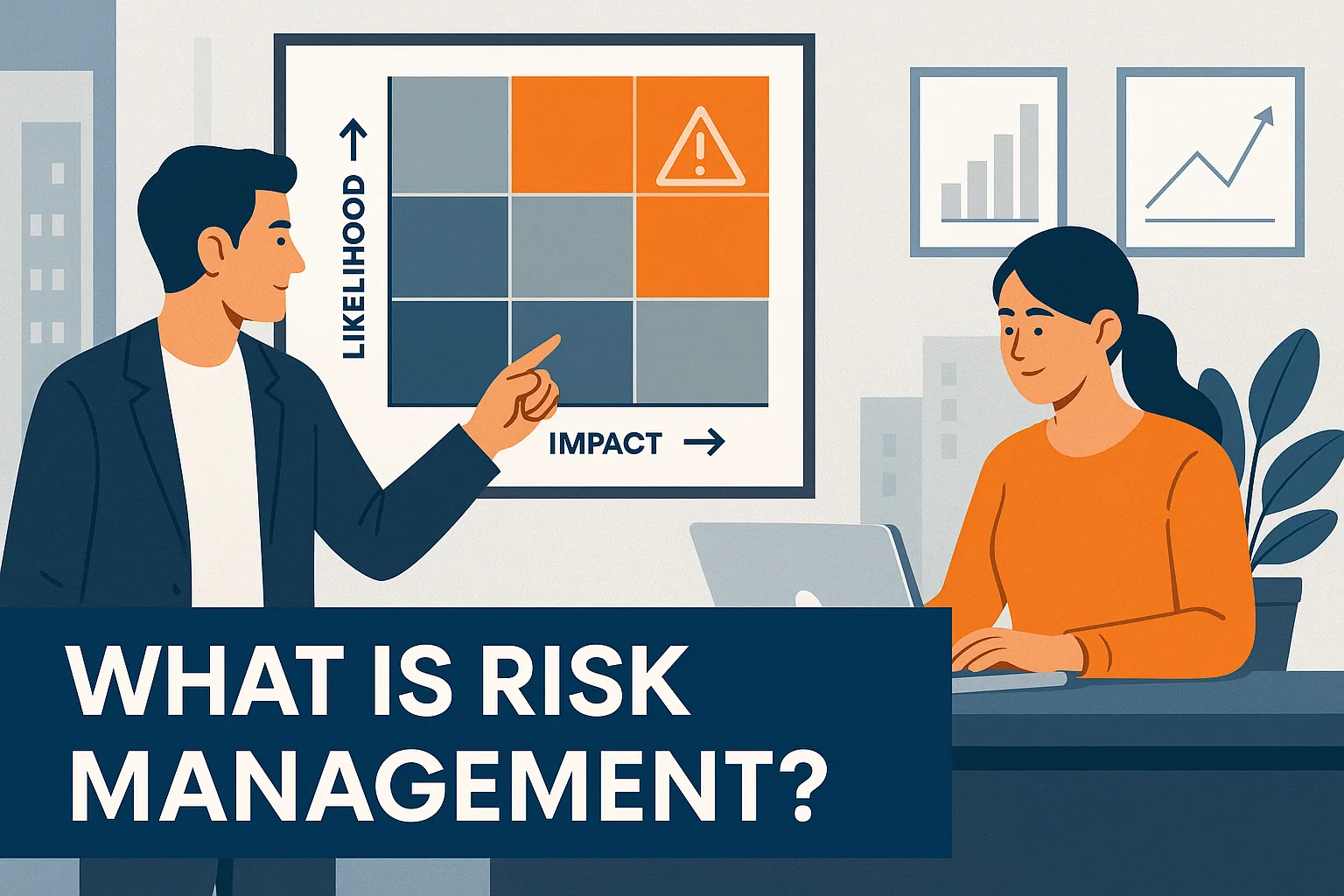
The more of these points apply, the more likely the pension insurance will classify the activity as dependent employment. Anyone who wants to review their position systematically will find the methodology behind it in What is risk management? – false self-employment is a classic risk that can be assessed and managed.
How many clients do I need to be safe?
There is no statutory minimum. But practice shows a clear threshold: if more than 83% of your revenue comes from one client, suspicion rises quickly. This rule of thumb comes from pension insurance practice on pension insurance obligation for employee-like self-employed people.
More important than the number alone, however, is the nature of the relationship: direction, fixed hours and lack of entrepreneurial independence are stronger indicators than client count alone. Two clients do not protect you if both engagements are lived like employment – and a single large client is less critical if work remains clearly self-directed and project-based. Client structure is also customer concentration risk; both topics therefore belong in the same risk review.
What is a status determination – and how does it work?
Status determination is the official procedure by which the Clearing Office of the German pension insurance bindingly clarifies whether a specific activity is self-employed or dependent employment. The process:
- Submit application – possible by contractor or client, ideally in the first month of the relationship (then insurance obligation in doubt only starts with the decision).
- Complete questionnaire – both sides describe the actual arrangement: direction, hours, tools, remuneration.
- Hearing – the Clearing Office shares its preliminary view; both sides can respond.
- Decision – the ruling is binding; objection and legal action are possible.
The procedure typically takes about three months. The big advantage: it creates legal certainty before contribution risks build up over years.
What does a retrospective determination cost in the worst case?
The cost risk lies mainly with the client – but hits the freelancer economically with full force. If false self-employment is found, the client pays social security contributions retrospectively for up to four years (employer and employee shares), up to 30 years in cases of intent. Late payment surcharges, VAT reversal and possible income tax back-payments follow. Depending on fee volume, amounts quickly reach five or six figures.
For the freelancer themselves that means: share of employee contributions for the last three months, correction of all invoices – and almost always loss of the client, because they avoid the risk going forward. That is why false self-employment is not purely a legal topic but an assessable business risk: probability of occurrence times damage, in euros.
How does Beraterium place status risk?
In the 2-week risk compass for solo self-employed people, false self-employment risk is assessed together with the other core risks – loss of capacity to work and customer concentration. The result is not legal advice but a prioritised risk picture: how likely is a review in your situation, what would it cost, and which measure reduces risk most effectively – diversification, contract adjustment or status determination? A compact overview of all solo risks is also on Protecting yourself when self-employed.
The first step costs nothing: work out what revenue share your largest client represents and honestly compare the five criteria above with your daily work. If both sit in the red zone, we are happy to clarify the scenario in a free intro call – 30 minutes, no obligation.